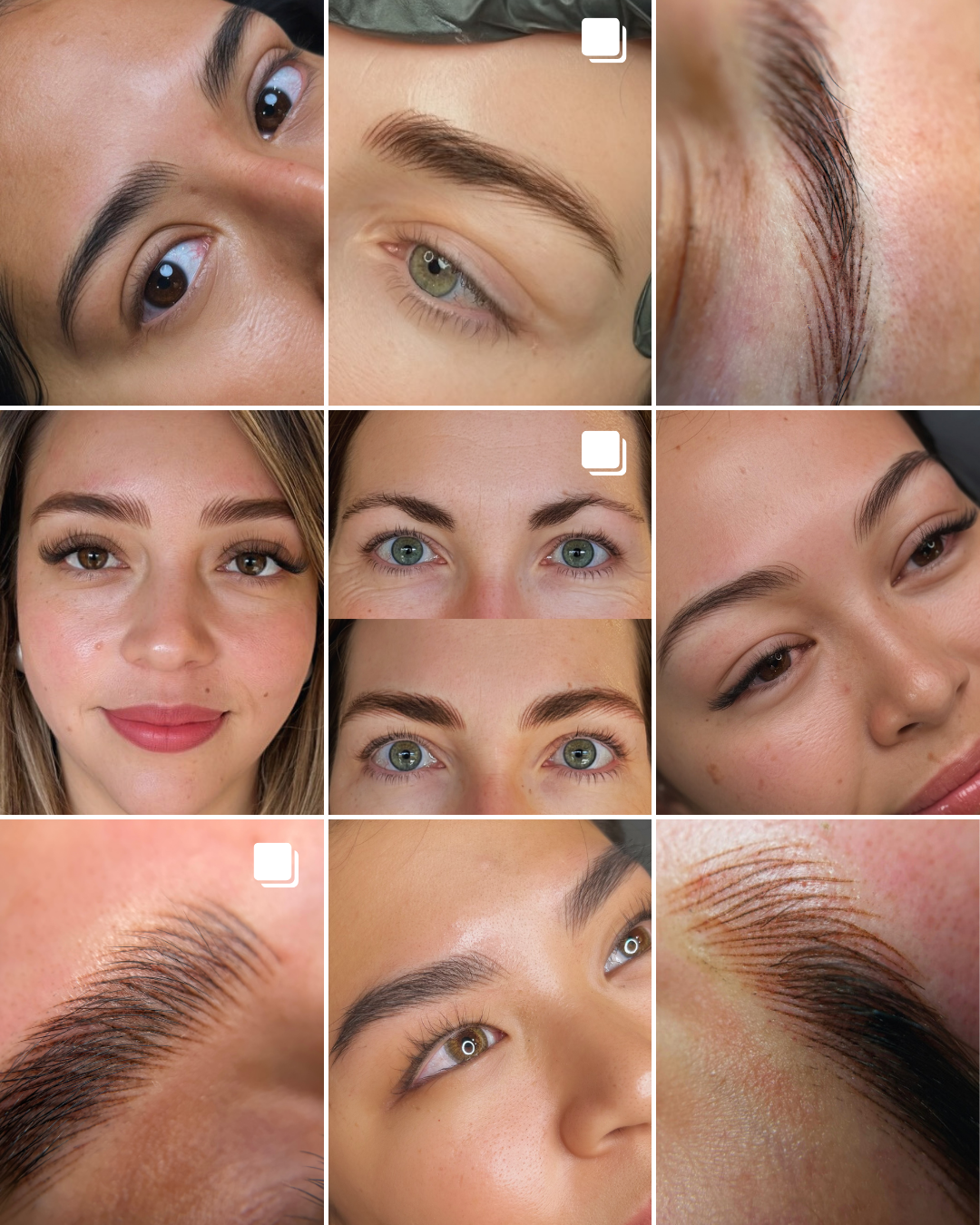
Fresh work can fool you. Healed work tells the truth.
I came to nano brows from microblading, and the biggest lesson I carried with me is that permanent makeup isn't instant. It develops. It settles. Every face heals differently, and the work has to be designed for that. What changed my work wasn't starting over. It was building on what I already knew, one small adjustment at a time. I think of it like braiding: once you know how, the next step is learning to make that braid more dimensional.
The same is true for most artists looking to improve their nano brows. The answer is rarely more information. It's less noise, more discernment, and an honest look at how the work actually heals.
Good artists judge fresh work. Great artists study healed work.
Fresh photos are flattering. The skin is still swollen, the pigment sits high, and every stroke looks sharp.
None of that shows how the brows will look in two months.
Great artists make a habit of studying healed results. They photograph at set intervals: right after the session, at the perfecting appointment, and again months later. They keep the lighting, angle, and distance the same, with no filters. And they look for patterns rather than one-offs. Are strokes blurring in the same part of the brow? Does one skin type fade faster? Does the front heal softer than the tail?
One blurry brow is a data point. The same blur across ten clients is a lesson.
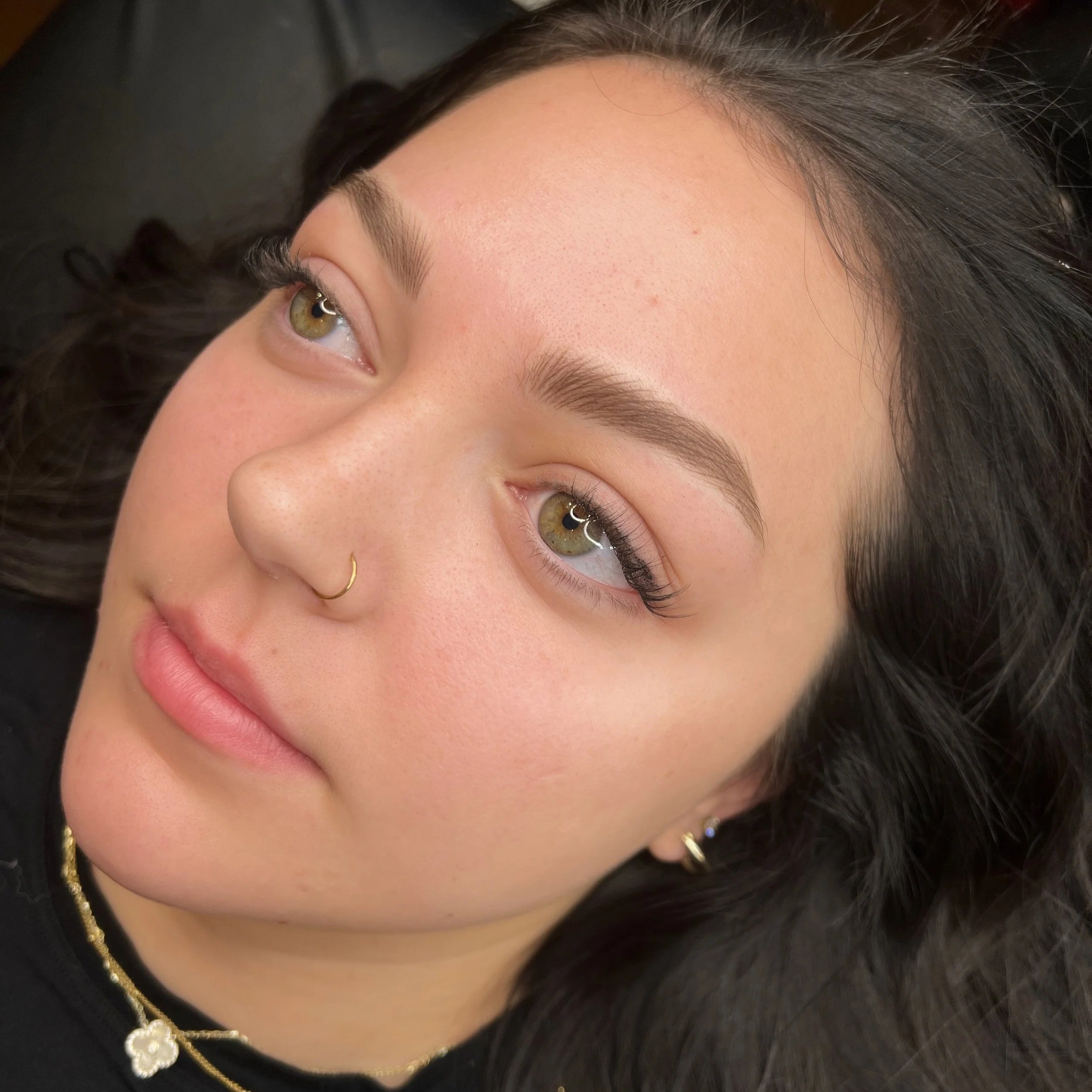
Good strokes look crisp today. Great strokes heal crisp.
When nano strokes heal blurry, patchy, or faded, the cause usually comes back to two things: depth and hand speed.
Depth
Nano strokes belong in a narrow, shallow layer of skin. Too deep, and pigment spreads beneath the surface, healing soft and sometimes gray. Too shallow, and it sheds out during healing, leaving gaps.
Hand speed
The machine sets the needle's rhythm. The hand decides how much pigment each stroke receives. Too slow overworks the skin. Too fast causes skipping, and strokes heal broken.
Consistent depth and steady hand speed are not basics to move past. They are the foundation every refinement is built on.
Good artists design for the photo. Great artists design for the skin.
A brow designed for a perfect fresh photo often packs strokes tightly for maximum density. On some skin, that same design heals into a solid, blurry block.
Great design starts with reading the skin.
Oily skin tends to soften and spread strokes as they heal, so more space between strokes lets each one stay distinct. Mature skin is often thinner and less elastic, and responds best to a lighter hand, good stretch, and fewer passes. Thin or sensitive skin tolerates less trauma, so fewer, more intentional strokes usually heal better than layered density.
Less density is not less effort. It's restraint, and restraint is what heals beautifully.
Good artists choose a color. Great artists plan how it heals.
Matching pigment to brow hair is only the first step. Color shifts as it heals and fades, and how it shifts depends on both the pigment and the skin.
A client's undertone affects how healed color reads. Some pigments cool over time and turn gray or ashy; others warm. Knowing how a pigment ages allows every choice to be made with the healed result in mind.
The goal is not just a beautiful color today. It's a color with longevity, one that fades softly over the next year or two.
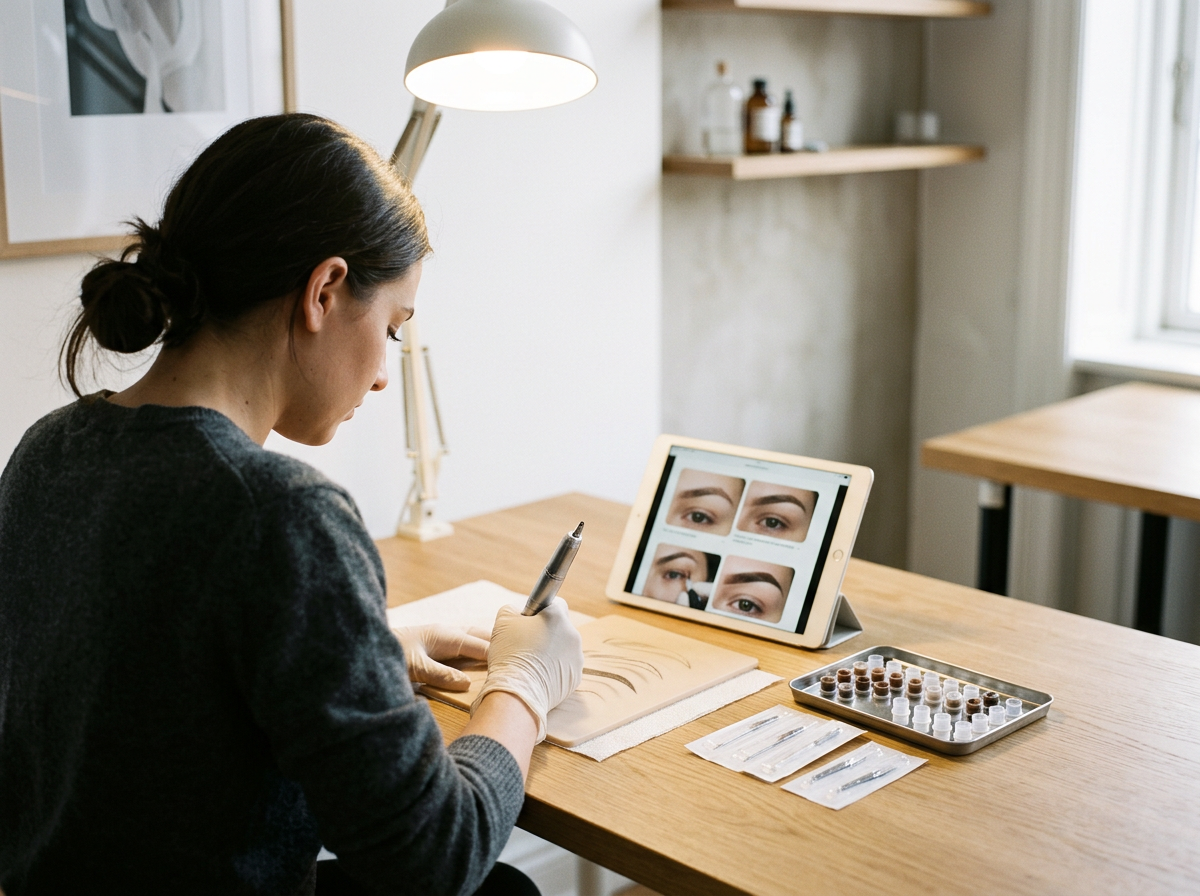
Good artists map the brow. Great artists map for the strokes.
Mapping sets the shape: start, arch, tail, and symmetry. For nano work, that's only half the design.
Great nano brows also account for the strokes themselves: their direction, angle, and flow through each part of the brow. Hairs at the front grow differently than those through the body and tail, and the most natural results follow that pattern.
Pre-drawing individual strokes inside the outline makes this possible. It lets the artist plan the flow, and it gives the client a realistic preview before anything is tattooed. Vanessa created [Brow Ink](link to the pen) for exactly this step: an ultra-fine multi-prong tip for realistic hair strokes, in a smudge-resistant formula that stays put throughout mapping.
Good artists practice more. Great artists practice with intention.
More reps only help when each one teaches something.
Latex builds stroke patterns, rhythm, and hand speed. It can't show how skin responds, so practice strokes shouldn't be over-read.
Live models are where real learning happens. Each session works best with one clear goal, such as adjusting spacing for oily skin or refining stroke direction at the front of the brow.
Then close the loop. Notes after every session, compared against healed photos, are how practice becomes progress.
Good artists keep going alone. Great artists get eyes on their work.
Blind spots are hard to see from the inside. A small habit can repeat for months before anyone realizes it's the reason strokes are blurring.
An experienced eye can often spot in minutes what might take a year to find alone. Usually it isn't a dramatic overhaul. It's a small adjustment to depth, spacing, or hand speed that changes how the work heals.
Asking for feedback is not a sign of being behind. It's how great artists keep growing, especially in a space with room to ask questions and permission to not know.
Accepting applications for 2027
Ready to refine your healed results?
One-on-one advanced nano brow education with Vanessa Baird, built around the artist you already are.
Less noise. More discernment.